Sculpture & Sensorial Machines
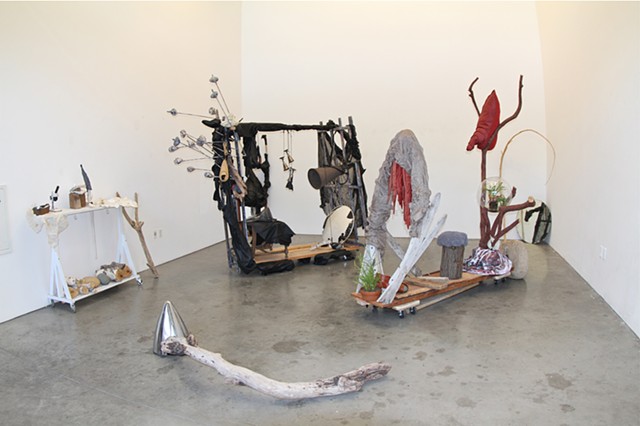
The Vestibulocochlear Nerve is the eighth cranial nerve, responsible for transmitting sound and balance from the inner ear to the brain. This sculpture, when activated, erupts in a cacophonous and chaotic symphony of metal and movement. An antique megaphone relays the sound directly to the participant, focusing its resonance. While sheep’s wool can dampen some vibrations, the experience remains tactile and immersive—sensation carried not only through hearing, but through the body itself.
The Olfactory Nerve is the first and shortest of the twelve cranial nerves. It conveys sensory information related to smell. This sculpture features a boiling pot of herbs that emits a moist, aromatic funk designed to stimulate the interactor.
Installation view of a large-scale series of interactive sculptures based on the cranial nerves. Sculptural machines are distributed throughout an open gallery, built from salvaged wood, rescued leather, hand-manipulated textiles, metal, mirrors, plants, vessels, and found objects. Many are mounted on wheels and can be rolled through the space, producing sound and movement when activated. The works range from human-scale to towering structures and are designed for bodily interaction—viewers can approach, move, listen, smell, and in some cases physically enter them.